
Materials
Wood & cedar fences
The most common privacy fence from The Woodlands to Lake Houston, built to last in heat and humidity.
Overview
The standard for privacy
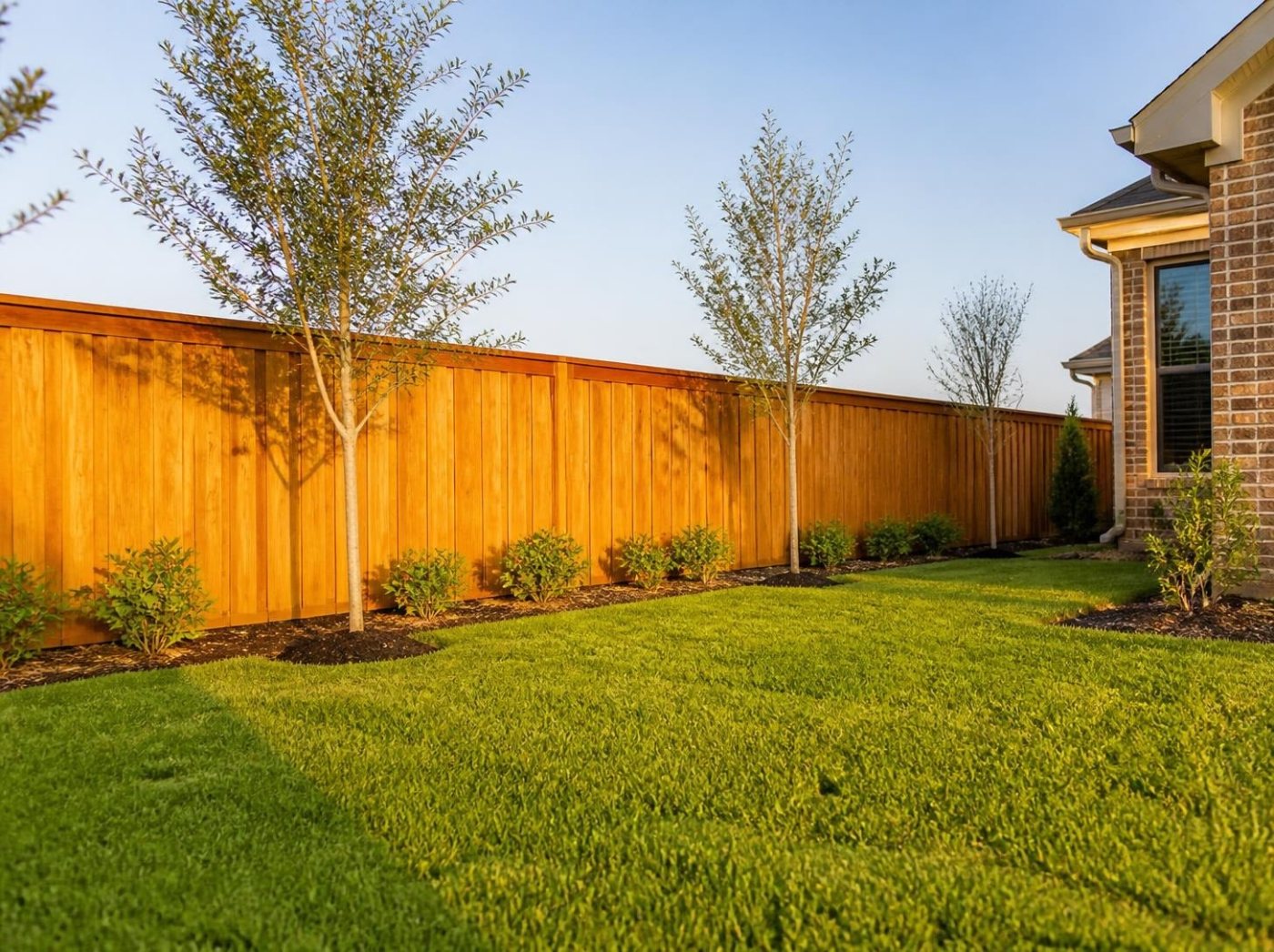
Cedar is the default backyard fence in most of the villages and subdivisions we serve, and it is one of the few materials every set of local rules allows. It resists rot and insects better than pine, takes stain well, and weathers to a soft gray if you leave it alone.
Pressure-treated pine costs less up front and is a sound choice for posts, rails, and budget fences. We build both with three rails, a rot board, and posts set deep in concrete.
- Allowed nearly everywhere, including under The Woodlands standards.
- Stains to any HOA color, or weathers naturally.
- Easy to repair one board or section at a time.
Options
Choices to make
Side-by-side
The classic privacy fence: pickets butted edge to edge.
Board-on-board
Overlapping pickets so no gaps open as the wood dries.
Shadowbox
Alternating pickets that look finished from both sides.
Capped and trimmed
A top cap and trim board for a finished look. In The Woodlands, a cap allows 2 extra inches of height.
Horizontal
Modern horizontal boards for a contemporary home.
Posts
Pressure-treated wood posts, or 2-inch galvanized steel posts where allowed.
Related: Privacy fences · Staining · Pricing guide
Questions
Common questions
How long does a cedar fence last here?
With good posts and periodic staining, a cedar fence commonly lasts well over a decade in our climate. Posts and how they were set usually decide the lifespan.
Cedar or pine?
Cedar resists rot and movement better and looks better stained. Pine is cheaper. Many fences use cedar pickets with treated pine framing.
Ready for a Free Estimate?
Call or text us, or book online. We'll walk your property and send a straight, written quote.