
Section 2.6 of The Woodlands Township’s Residential Development Standards covers fences, and it’s more detailed than most HOA rules around Houston. Here are the parts that come up on almost every project. Your Neighborhood Criteria can add to these, including requiring a specific fence design on your street.
Height
- Solid fences: up to 7’6”, or 8’6” on the portion running parallel to a designated arterial, major thoroughfare, or collector street.
- Transparent (see-through) fences: up to 6’6”.
- Caps: a capped fence gets an extra two inches for the cap and trim.
- Rot boards: a bottom board up to six inches is approvable. Up to 12 inches is possible with native evergreen screening between the fence and the street.
- Minimum: perimeter fences must be at least four feet tall.
Placement
- On your lot only. Fences must sit entirely on your property, and they can’t go in a public street right-of-way, open space reserve, or greenbelt.
- Solid fences and the front of the house: solid fences must sit at least three feet behind the front façade.
- Front see-through fences: these must be set back at least five feet from the front property line, with plantings between the fence and the street.
- Rear lines facing a public street: solid fences must be set back 10 feet or to the platted building line, whichever is greater.
- Golf course and lake lots: solid fences aren’t allowed along the rear property line.
- Private streets and public access easements: fences must be 10 feet from the edge of the pavement.
- Finished side out: the finished side faces the street or neighboring property. A “good neighbor” fence that alternates sides needs your neighbor’s written consent, unless it’s a repair or replacement of an existing one.
Materials
Allowed: wood, metal, stone, and masonry. Galvanized steel posts up to two inches in diameter can be used on the inside of a solid fence.
Not allowed: chain link or wire (unless fully screened inside an approved solid fence), sheet or expanded metal, stamped metal posts, plastic or fiberglass, rope, bamboo, reed, wire-bound wood pickets, and unfinished cinder block.
Pet barriers: black mesh can be added to the inside of a wrought iron fence, up to three feet high. It’s allowed temporarily for six months or less; permanent mesh needs evergreen screening toward the street.
Stain and paint
- Wood fences may weather naturally.
- Transparent and semi-transparent stains listed in Appendix C of the standards are pre-approved.
- Paint, solid stain, or tinted sealant must be a muted shade and needs approval before it goes on.
- White fences are considered only where they’re architecturally appropriate.
Pools, spas, and ponds
Pools, hot tubs, spas, and ponds deeper than two feet need a barrier that meets the International Residential Code. Changing more than eight feet of a fence that serves as a barrier, or installing or repairing its gates, triggers a new inspection. A temporary barrier is required any time the permanent one is down. See pool enclosures.
Putting it together
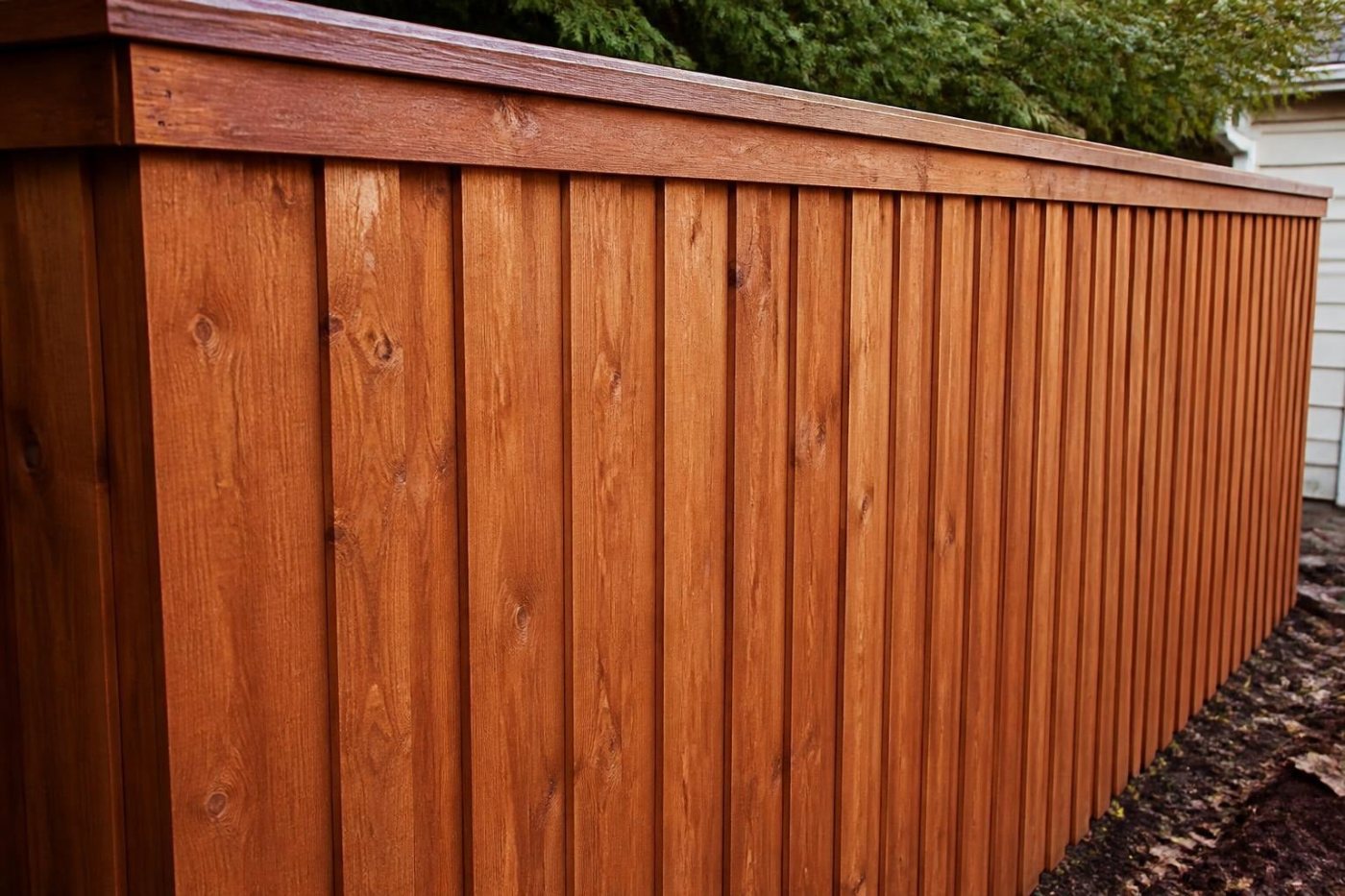
On a typical interior lot, a 6- to 7-foot cedar privacy fence, set three feet behind the front of the house and finished side out, fits the standards well. On a golf course or lake lot, plan on ornamental aluminum or steel along the back. Once the design fits, the next step is getting it approved.
Not sure what fits your lot? Request a free estimate, and we’ll check your lot and Neighborhood Criteria before we design anything.
Summarized from Section 2.6 of The Woodlands Township's 2024 Residential Development Standards (recorded December 10, 2024). This is a guide, not the full text. The recorded standards and your Neighborhood Criteria control, and they can change.