

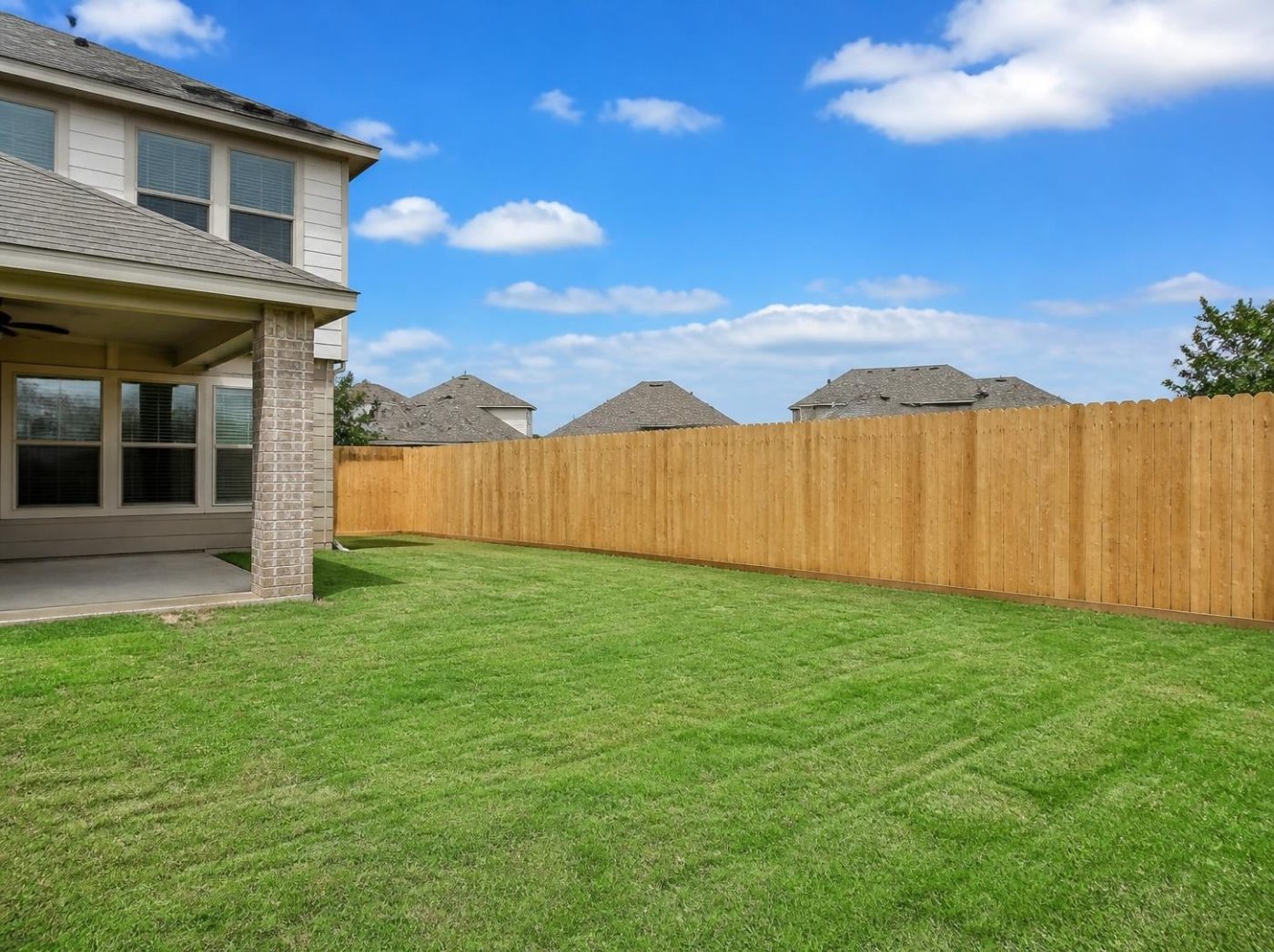
When people compare quotes for a cedar privacy fence, steel vs. wood fence posts is a common question. Both work. They fail in different ways, though, and on wooded, flat lots in The Woodlands, Porter, New Caney, and Splendora, the ground under the fence has a lot to say about which one lasts.
Here’s how pressure-treated wood and galvanized steel posts compare, one factor at a time.
What the Township allows
Inside The Woodlands, the Residential Development Standards allow galvanized steel posts up to two inches in diameter on the inside of a solid fence. Stamped metal posts are on the prohibited list. Wood posts are allowed. So for a standard cedar privacy fence, both options are on the table as long as the steel is round galvanized post, not the thin stamped kind. Our fence rules guide covers the rest of the material list.
Steel vs. wood fence posts, compared
Upfront cost
Wood is cheaper per post, and a wood post fence is the lower bid on most jobs. Steel adds cost for the posts and the brackets that tie the wood rails to them. On a typical backyard the difference is noticeable but rarely the biggest number on the quote. Labor, linear footage, and gates drive most of the price.
Lifespan and how each one fails
A pressure-treated post almost never fails in the middle. It rots at the ground line, where wet soil and air meet, and where the top of the concrete holds water against the wood. One day the fence leans in a storm and the post snaps right at grade.
Galvanized steel doesn’t rot. Its weak point is rust where the coating gets scratched or where water sits against it for years. A post set with the concrete crowned away from it, so water sheds instead of pooling, holds up for a long time. In our experience, posts are what decide whether a fence is replaced or just re-picketed, and steel posts often outlast the first set of pickets.
Wet ground and the perched water table
This is where the local ground matters. Most lots in this part of Montgomery County have a layer of sandy or fine-sandy loam over a clay subsoil. On the flatter ground around The Woodlands, Porter, New Caney, and Splendora, that clay sits closer to the surface, and in wet months water perches on top of it. Post holes slough in or fill with water before you can set anything.
That wet season is hard on wood posts, which sit in damp soil for months at a time. Steel shrugs it off. Either way, the hole matters more than the post: we never pour concrete into standing water. We get the water out, put gravel in the bottom, and then set the post. If you’re on the east side of the area, our Porter, New Caney & Splendora page has more on building there.
Wind and storms
Steel is stiffer. A wood 4x4 can twist and check as it dries, which pulls rails out of line, and a post weakened at grade is the first thing to go in a tropical storm or a strong spring front. Steel posts stay straight and hold their strength at the ground line, which is where storm loads hit hardest on a tall solid fence.
Looks
On a solid fence, the finished side faces the street or neighbor, and the posts sit on the inside. From outside, nobody can tell the difference. From your yard, you’ll see round gray posts behind the rails instead of square wood ones. If you’d rather not see them, some homeowners have us enclose each steel post in wood trim, which keeps the strength of steel with the look of a wood post from your yard.
Repairs and maintenance
A rotted wood post usually means digging out the old footing and setting a new one, and if one post is gone at the ground line, its neighbors are often close behind. Steel posts rarely need replacing, so later repairs tend to be pickets, rails, or a gate. Our repair page explains how we decide between patching and replacing.
The practical takeaway
- Choose wood posts if budget is tight, you plan to move in a few years, or the fence is a lower or see-through style where storm loads are small.
- Choose galvanized steel posts if you’re building a tall cedar privacy fence you want to keep for a long time, your lot holds water in winter, or you’ve already replaced rotted wood posts once.
- Either way, ask how deep the posts go, how much concrete each gets, and what the installer does when the hole fills with water.
Planning a new fence?
We’ll look at your lot, check what your Neighborhood Criteria allow, and price both post options side by side so you can choose. Request a free estimate or call (713) 331-9385.
Material rules summarized from Section 2.6 of The Woodlands Township's 2024 Residential Development Standards (recorded December 10, 2024). The recorded standards and your Neighborhood Criteria control, and they can change.